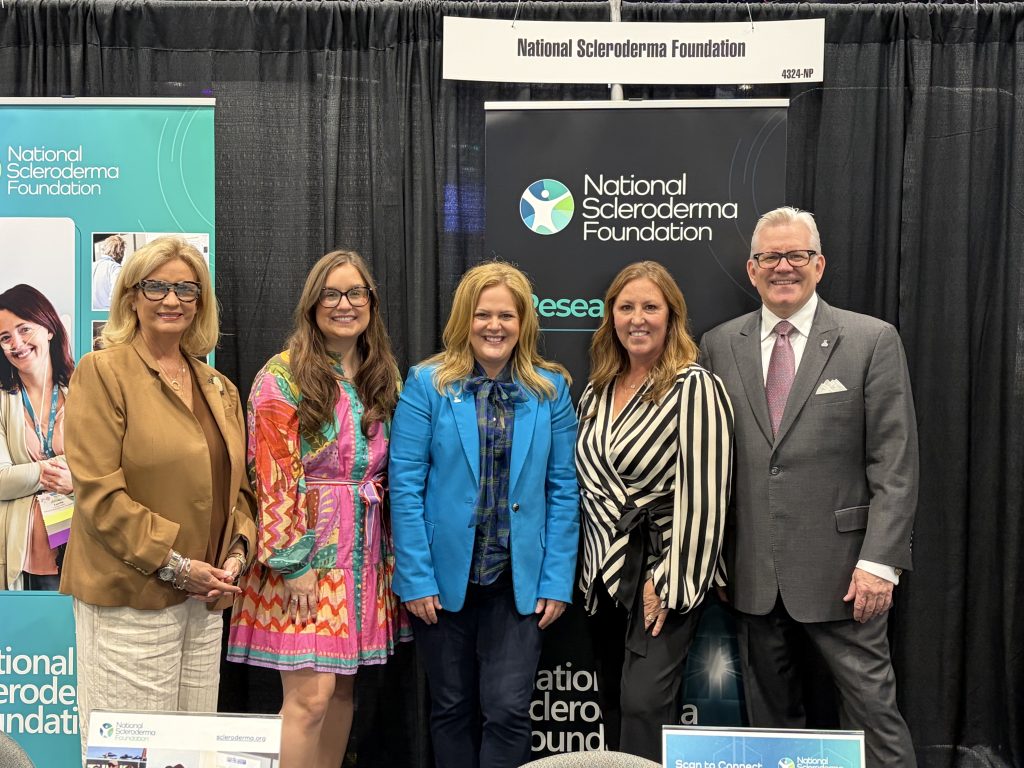
The National Scleroderma Foundation team is heading home from an inspiring week of science, community and connection at ACR Convergence 2026 in Orlando.
The breadth of scleroderma research at this year’s conference gives us reason to be hopeful about meaningful improvements for people living with the disease.
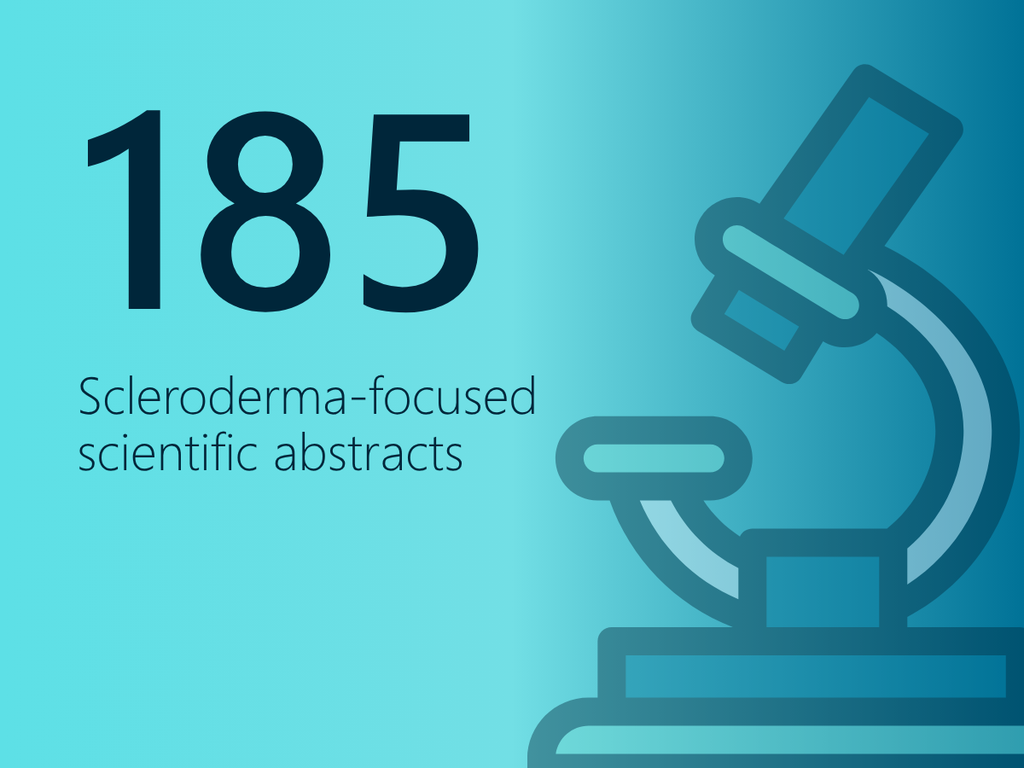
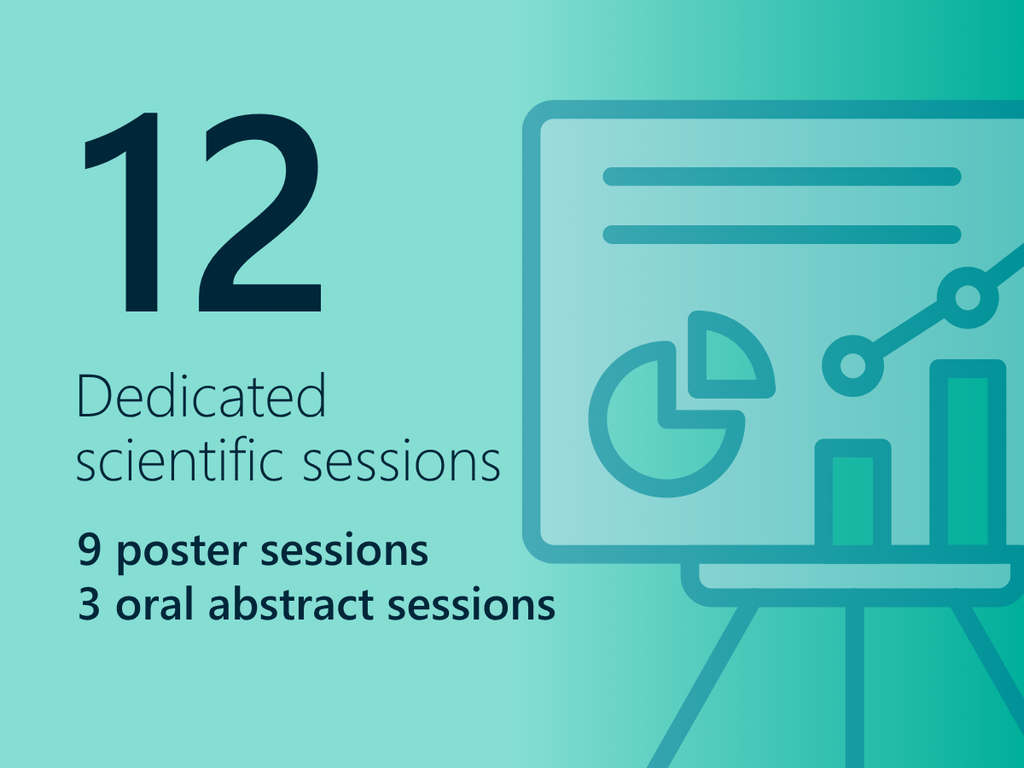
On Friday, we hosted a research briefing to center people living with scleroderma in the upcoming discussions at Convergence. Patient advocates Desiree James and Monica Ramirez shared their stories with dozens of attendees representing advocacy, pharmaceutical and biotech companies, and researchers. Drs. Carol Feghali-Bostwick and Liz Volkmann summarized key themes from more than 185 research summaries, or abstracts, featured in sessions dedicated to scleroderma.
These sessions covered discoveries made in the lab and efforts to turn them into better care, ways to diagnose the disease and understand its effects, and treatments. Researchers explored what drives tissue thickening and scarring, known as fibrosis, as well as tools for earlier detection, interstitial lung disease, patients’ own reports of their health and daily lives, and a growing range of therapies.

Saturday evening opened with ACR President Dr. Will Harvey casting an inspiring vision for the community, “I’m manifesting tonight that the first person cured of their lupus or their scleroderma is alive in the world today,” he said, “and the person to make that discovery is at this meeting.”
Later that evening, at the BMS Patient Advocacy Forum, one of our advocates, Ann, shared her personal experience as a participant in a CAR-T trial, describing the transformational changes that have allowed her to regain an active lifestyle and spend more time with her grandchildren. Ann’s story brought the science into focus, reminding us what progress can mean in everyday life and why continued research matters to our community.

Sunday’s Year in Review session spanned several rheumatic diseases, but many of the scientific themes have important implications for scleroderma. Emerging research into fibroblasts, stromal tissue, immune dysregulation and fibrogenic signaling—including pathways involving TGF-beta—may deepen our understanding of how chronic inflammation and fibrosis become established and persist across autoimmune diseases. The session also highlighted new phase 3 data for sotatercept in pulmonary arterial hypertension (PAH), a serious and potentially life-threatening complication of systemic sclerosis. These advances illustrate how discoveries across rheumatology can inform the search for better ways to understand, treat and ultimately prevent some of the most challenging manifestations of scleroderma.
Reflecting on everything our team witnessed this week, five key themes emerged.
1. Earlier identification and better prediction are opening new possibilities.
Researchers are working to identify who is at risk and how scleroderma may progress before organ damage occurs (this damage often cannot be reversed). They studied autoantibodies, which are immune proteins that target the body’s own cells; patterns of gene activity, called transcriptomic signatures; medical images; and measures of lung function. They also used machine learning to look for patterns in data. One model used measurements from CT scans to predict abnormalities in the esophagus.
2. Research is embracing the whole experience of living with scleroderma.
This echoes a theme we heard loud and clear at our Summit earlier this year. We were pleased to see the program wasn’t confined to skin scores and organ function. Researchers examined frailty, functional capacity, shortness of breath, hand function, musculoskeletal involvement, reduced mouth opening and other outcomes that directly affect daily life. That is an encouraging shift toward measuring whether treatments improve things patients actually experience.
Interstitial lung disease remains the leading cause of mortality in people living with scleroderma, and systemic sclerosis-associated interstitial lung disease appeared repeatedly across programs. Ranging from screening, disease progression, biomarkers, treatment patterns, comparative effectiveness and novel therapies. Research included questions as practical as whether high-resolution CT should be used more broadly for screening and as forward-looking as plasma-cell depletion for severe refractory ILD.
3. Researchers are exploring ways to change the biology of scleroderma.
Researchers are studying what drives tissue thickening and scarring, problems with the immune system, and blood vessel disease. This work spans laboratory science and efforts to turn discoveries into treatments. Methods such as single-cell and spatial transcriptomics examine gene activity in individual cells and where that activity occurs within tissue. Researchers also studied processes involving fibroblasts, the cells that produce collagen; endothelial cells, which line blood vessels; and injury to epithelial cells, which cover body surfaces and line organs.
4. Emerging tools are bringing personalized treatment closer.
Researchers are exploring tools that may eventually help match treatments to each person’s unique pattern of scleroderma. They presented ways to use artificial intelligence (AI) to assess facial movement and study how the disease affects individual cells. Other approaches included single-cell sequencing to examine genetic information in individual cells, spatial transcriptomics to map gene activity within tissue, proteomics to study proteins, and multi-omics to combine several types of biological information. Together, these tools may help identify groups of patients with different underlying disease patterns and guide more personalized treatment.
5. Investigational therapies are advancing toward new treatment possibilities.
Because scleroderma affects people differently, one treatment is unlikely to work for everyone. Cellular therapies remained a focus this year, alongside studies of existing and entirely new treatments. We were encouraged by this range of approaches and the possibility that more options may become available to our community.
Researchers presented data on both allogeneic and in-vivo CD19 CAR-T approaches, alongside systematic reviews of CAR-T/CAR-NK therapy and studies of T-cell engagers targeting B cells and plasma cells. This is particularly encouraging because it signals that we are moving from looking at a single experimental approach toward an emerging family of immune-reset strategies.
The treatment portfolio ranged from rituximab, tocilizumab and nintedanib to stem-cell transplantation, T-cell engagers, bispecific antibodies and new Phase III trials. The oral treatment session included the Phase III VERANDA-SSc trial design as well as studies of rituximab, Raynaud’s treatments, T-cell engagers and biomarkers following stem-cell transplantation.
Together, these presentations reflect a growing field that is studying the disease in greater detail and working toward more precise care. We are grateful to our many partners who share our vision: supporting people living with scleroderma today while investing in a cure for the future. And we are leaving ACR Convergence 2026 with renewed hope for a future of earlier diagnosis, more personalized treatments and better daily lives for people living with scleroderma.
Scleroderma Research at ACR: Dedicated Systemic Sclerosis & Related Disorders Program