By: Mary Whealey, IOM, CAE
On Friday morning, the National Scleroderma Foundation hosted a Scleroderma Research Briefing at ACR Convergence 2026, bringing together patients, researchers, clinicians and partners to explore where research is headed, emerging treatments, and the discoveries moving the field closer to better outcomes for people living with scleroderma. Desiree James and Monica Ramirez shared patient perspectives, followed by research highlights from Dr. Carol Feghali-Bostwick and Dr. Elizabeth Volkmann.
A central theme throughout the briefing was the importance of keeping people with scleroderma at the center of research. As Desiree James shared, research can provide answers, create a brighter future, give patients a voice and, more importantly, give them hope. That patient-centered perspective aligns closely with the Foundation’s strategic priorities: earlier diagnosis and access to expert care, a connected and supported scleroderma journey, stronger patient voice and influence, and research accelerated toward better outcomes.
Drs. Feghali-Bostwick and Volkmann highlighted several areas of progress and opportunity:
- Broadening the focus of clinical research. Researchers are increasingly studying manifestations beyond skin and lung disease, including limited cutaneous systemic sclerosis, gastrointestinal disease and calcinosis. Patients with limited cutaneous systemic sclerosis have historically been underrepresented in clinical research, so a first-of-its-kind pilot trial demonstrating that dedicated trials in this population are feasible is an important step.
- Developing better ways to measure disease. New imaging approaches may make it possible to objectively track calcinosis over time, while an international research effort supported by the Foundation is developing a new patient-reported outcome measure to better capture changes in gastrointestinal symptoms.
- Exploring transformative treatments. Cellular therapies, including approaches targeting CD19, remain an exciting area of research and have shown dramatic improvements in small early studies. Recent safety events and trial pauses, however, underscore the need for continued research to better understand and prevent serious inflammatory complications.
- A robust clinical development pipeline. Research activity in systemic sclerosis remains strong, with hundreds of studies represented in ClinicalTrials.gov. More than 50 ongoing scleroderma trials are highlighted through the Foundation’s Carebox clinical trial finder, and its personalized trial-matching tool helps patients identify studies that may be relevant to them. Session activity on the tool has increased by more than 50% over the past year.
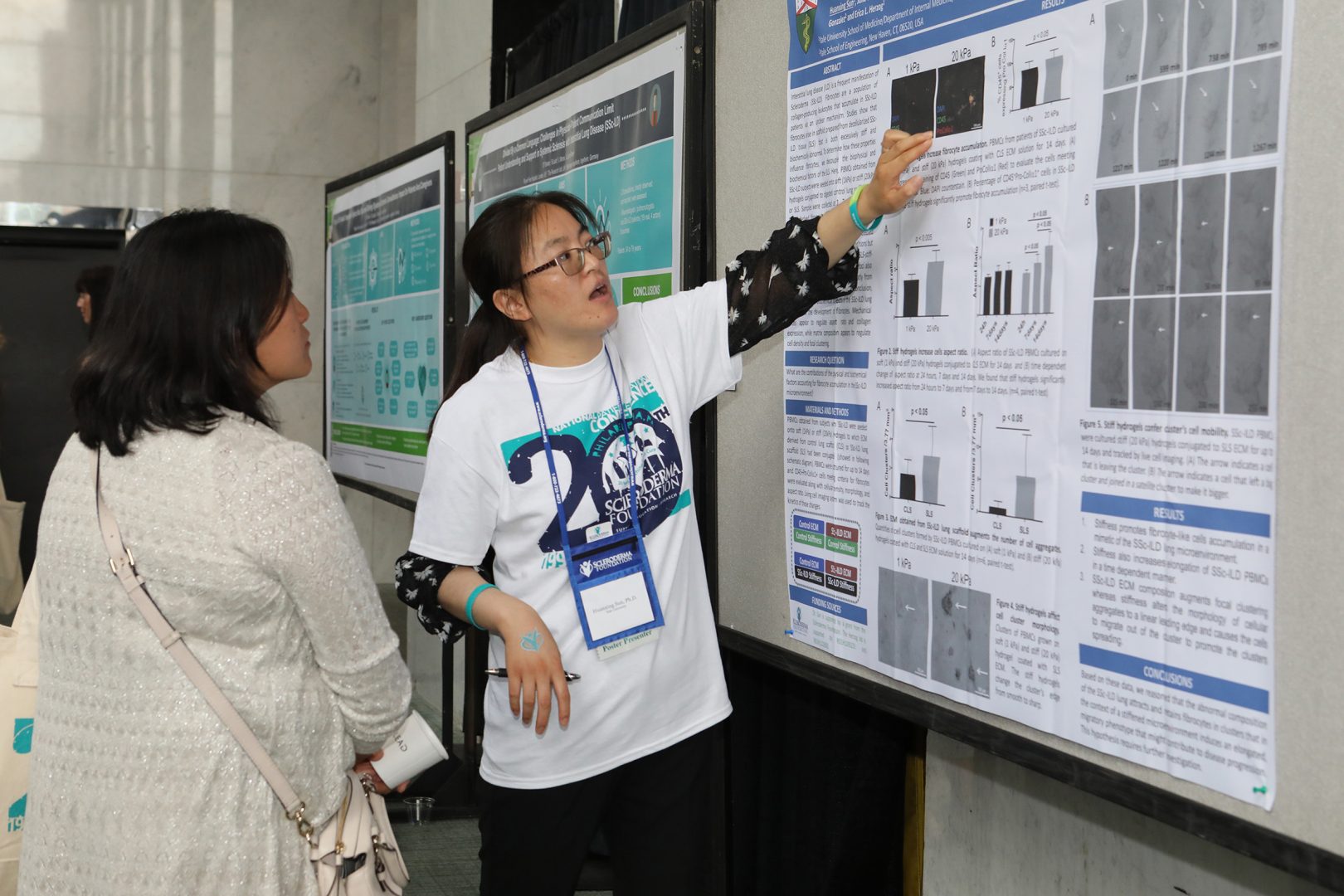
- New scientific frontiers. Investigators are advancing work in genetics, the microbiome, immune-based therapies, extracellular vesicles, fibrosis pathways and new disease models. Research presented at ACR also included emerging tools to predict lung-function decline, new insights into juvenile systemic sclerosis, the possible molecular basis of female predominance in scleroderma, and new understanding of how fibroblasts become activated and drive fibrosis.
The briefing also highlighted the growing scale and connectivity of the scleroderma research community. Scientific publications have increased substantially over time, international collaborations continue to expand, and major initiatives such as the Accelerating Medicines Partnership Autoimmune and Immune-Mediated Diseases program (AMP AIM) are creating new opportunities to understand disease biology and accelerate discovery.
This morning’s event offered an encouraging picture of a field that is evolving rapidly, marked by more collaboration, better tools, broader clinical trials, new therapeutic approaches and a growing commitment to studying the aspects of scleroderma that matter most to patients. There is still much work ahead, but the breadth of research underway provides real reason for optimism and reinforces why sustained investment, partnership and patient participation are so critical.
I can’t imagine a better way to kick off ACR Convergence 2026!