National Scleroderma Foundation CEO Mary Wheatley traveled to the 2026 European Congress of Rheumatology to kick off Scleroderma Awareness Month and shared the following reflections on the major gathering of healthcare providers and researchers.
More than 14,000 participants gathered in London last week for the 2026 EULAR European Congress of Rheumatology, bringing together healthcare professionals, pioneering researchers, industry leaders, and patient advocates from around the globe to discuss the latest advancements in rheumatology and musculoskeletal diseases.
For those of us focused on systemic sclerosis, or scleroderma, it was an energizing and productive week, and a powerful reminder of the global momentum behind scleroderma research, advocacy, and care.
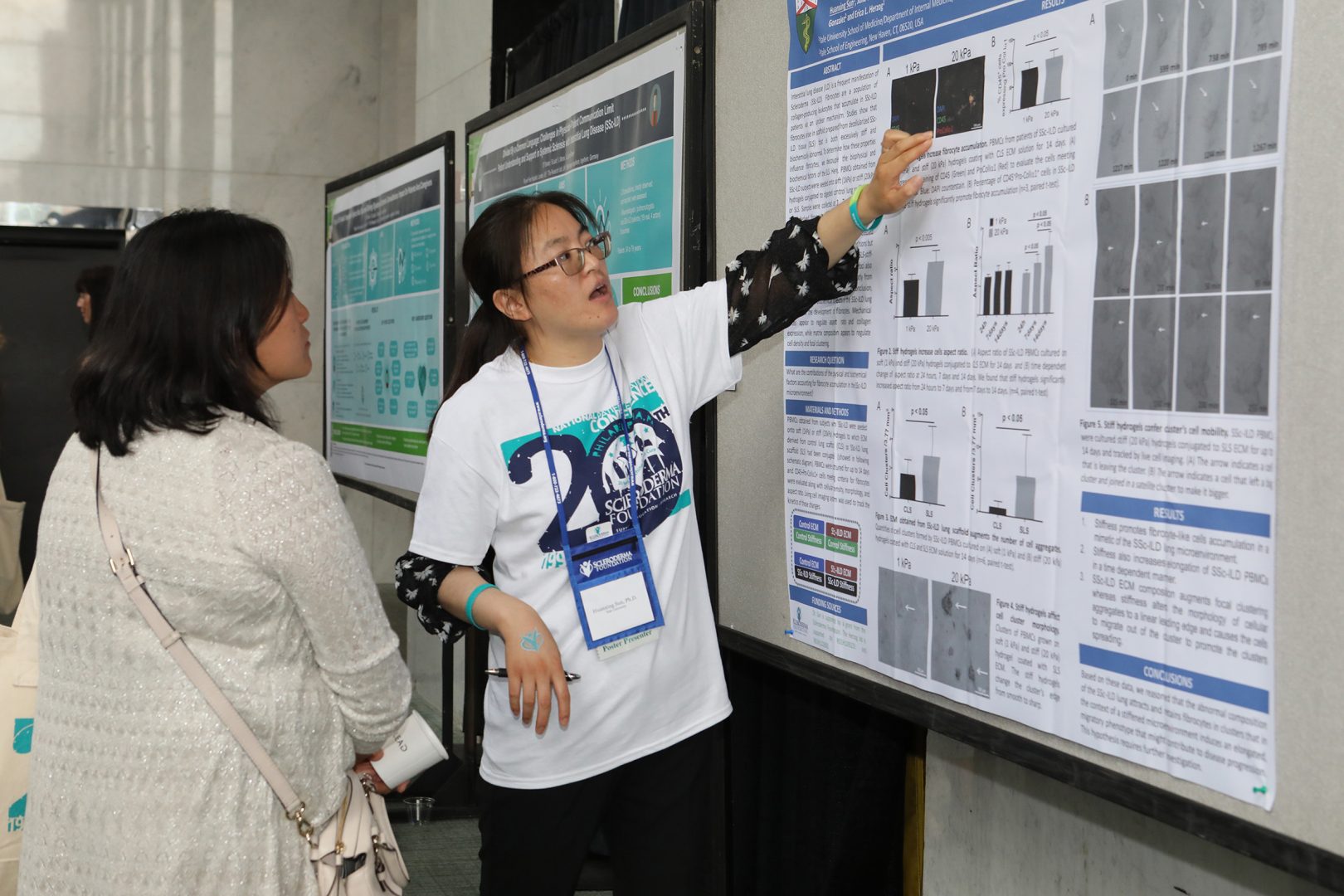
Over the course of four days, there were more than 150 sessions, posters, and oral abstracts focused on scleroderma. It was remarkable to see the breadth and depth of science being presented, spanning earlier detection and diagnosis, precision phenotyping, novel treatments, and potentially curative therapeutic approaches.
The field continues to move forward at an extraordinary pace. One clear theme throughout the Congress was the growing recognition of scleroderma as a systemic, multi-organ disease. While it remains essential to deepen our understanding of organ-specific impacts, including the lungs, gastrointestinal tract, heart, and vasculature, we must also continue pushing for disease-modifying treatments that benefit the whole patient.
The integration of AI, multi-omics, and real-world cohorts is accelerating discovery and bringing the field closer to more targeted, individualized approaches. There was strong emphasis on fibroblast–immune cell crosstalk, including fibroblast–T cell interactions in early disease and immune-cell niches that may drive fibrosis. Interferon pathways also remain central to understanding systemic disease activity and predicting complications such as cardiac involvement, while emerging pathogenic concepts are opening the door to new therapeutic pathways.
Another major focus was predicting disease progression and stratifying patient cohorts. Researchers presented important advances in blood and molecular biomarkers, as well as compelling data supporting the role of imaging biomarkers. Interstitial lung disease continues to dominate scleroderma research, with ongoing progress in screening tools, structured diagnostic pathways, and predictive models. By leveraging imaging, biomarkers, and AI, the field is moving closer to more reliable ways to predict progression and guide treatment decisions.
With dozens of clinical trials ongoing, there was also significant discussion around treatment optimization and comparative effectiveness studies. Real-world data is increasingly being used to inform clinical decision-making, helping clinicians and researchers better understand which treatments may work best, for whom, and when.
Therapeutic advances were a major theme throughout the Congress. Established and emerging therapies were discussed across multiple sessions, including continued validation of IL-6 inhibitors and real-world evidence supporting the use of antifibrotics to help slow progression. PDE inhibitors and other vasoactive therapies also remain important areas of focus for vascular disease.
Perhaps most excitingly, early data from CAR-T trials continues to suggest the potential for an “immune reset,” with encouraging data also emerging around bispecific T-cell engagers. While there is still much to learn, these approaches point toward a future in which deeper, more durable disease modification may be possible.
Beyond the scientific sessions, EULAR was also an important opportunity for connection. Throughout the Congress, I had the chance to meet with several of our corporate partners to discuss shared priorities, emerging opportunities, and ways we can continue working together to advance the needs of people living with scleroderma. These conversations reinforced the importance of strong partnerships in increasing awareness, education, research, and support.
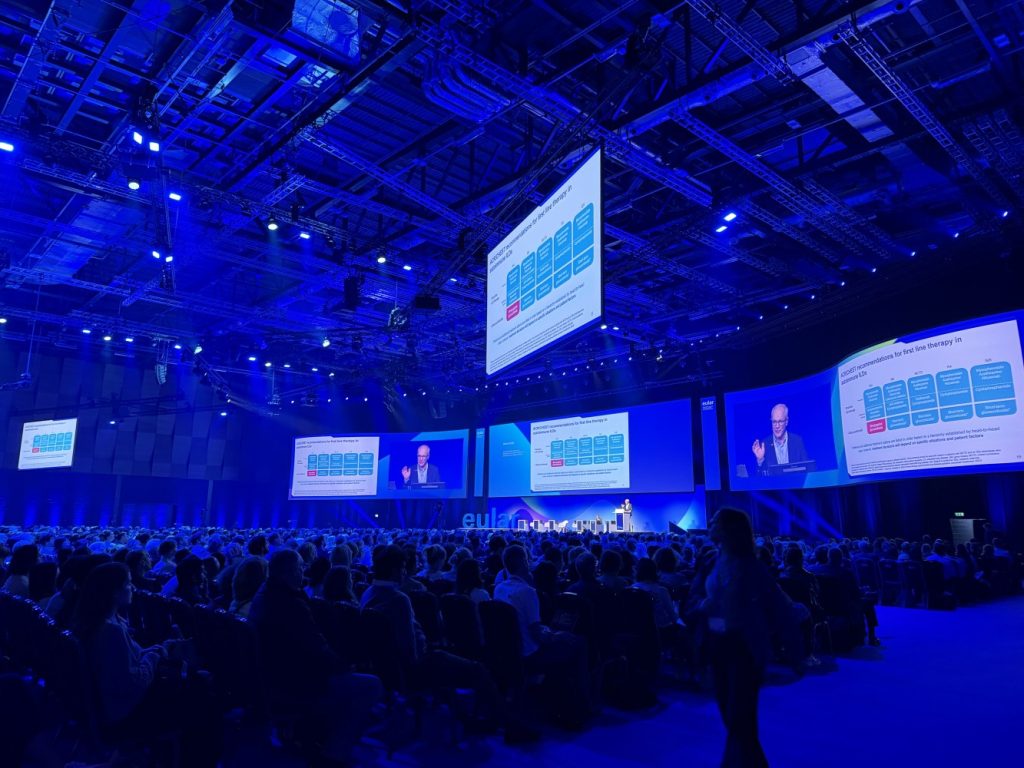

A personal highlight was attending Friday’s plenary session on deciphering pathogenesis, unveiling comorbidities, and paving the way for targeted treatment. Professor Oliver Distler delivered an elegant and thought-provoking talk — to a packed plenary hall — highlighting the latest scientific and clinical developments in systemic sclerosis. His presentation underscored both the remarkable progress being made and the urgent work that remains.
I also deeply valued the opportunity to connect with FESCA leadership and discuss the international advocacy landscape, including how patient organizations can continue learning from and strengthening one another in support of the global scleroderma community.
The Congress Dinner provided another meaningful opportunity to reconnect with scleroderma researchers, clinicians, advocates, and colleagues from around the world. These informal conversations are often where relationships deepen, ideas begin to take shape, and future collaborations are sparked.
Overall, EULAR 2026 was an inspiring and productive gathering. I left the Congress encouraged by the dedication, innovation, and collaboration across the global scleroderma community and grateful for the many partners, researchers, clinicians, and advocates who remain committed to improving outcomes and quality of life for everyone affected by scleroderma.